Quick answer
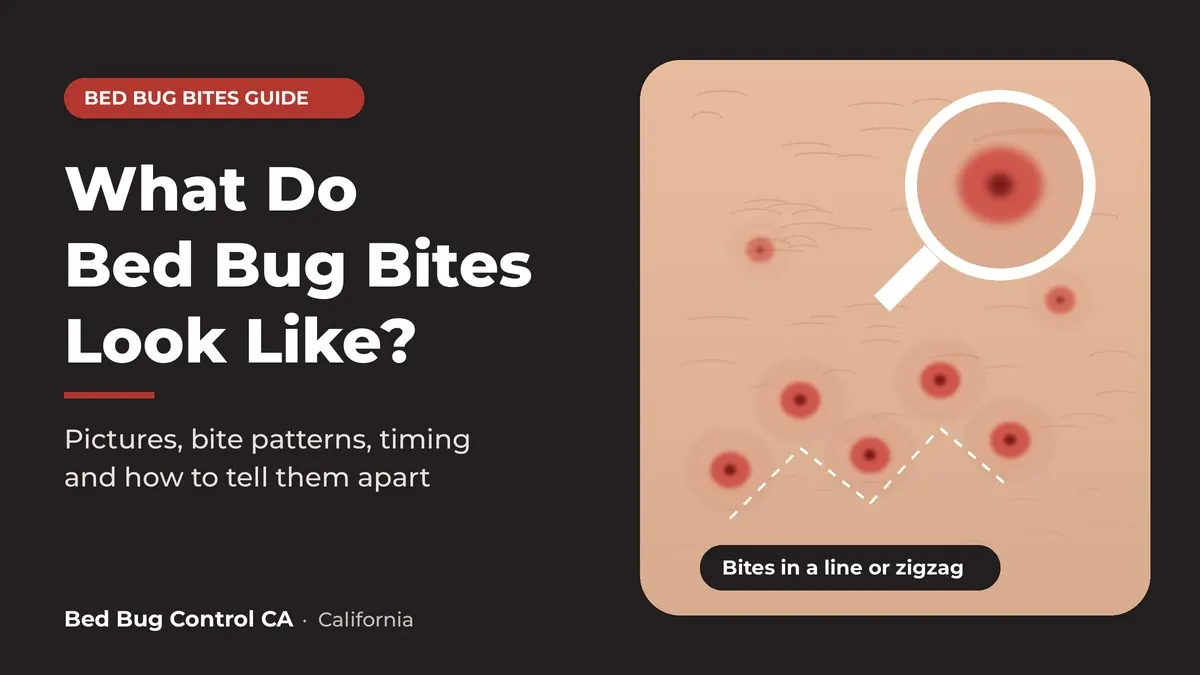
Bed bug bites look like small, raised, red or pink bumps, often with a darker red dot in the middle. They usually show up in a line, a zigzag or a tight cluster of 3 to 5 bites on skin that was exposed while you slept, like the arms, neck, face, shoulders and legs. They itch, and they can take anywhere from a few hours to 14 days to appear.
If you woke up with itchy red bumps and you are wondering whether bed bugs are to blame, you are in the right place. This guide walks you through exactly what bed bug bites look like, how they differ from mosquito, flea and spider bites, how they look on different skin tones, how long they last, and what to do next.
One thing to know up front: bites alone cannot prove you have bed bugs. Many other things cause similar marks. The only way to know for sure is to find the bugs or their signs, which is what a licensed inspection is for. We will show you how to check.
Key takeaways
- Bed bug bites are small raised welts, red or pink on light skin and purple, dark brown or grayish on darker skin.
- They often appear in a straight line, a zigzag or a group of 3 to 5 bites.
- They show up on skin that touches the bed: arms, shoulders, neck, face, back and legs.
- Marks can appear hours later or take up to 14 days. Some people never react at all.
- Most bites fade in 1 to 2 weeks. Bed bugs are not known to spread disease.
- To confirm bed bugs, look for rusty spots, shed skins, eggs or live bugs on the mattress seams.
What Do Bed Bug Bites Look Like?
A typical bed bug bite is a small, slightly swollen, red bump about the size of a mosquito bite or a bit smaller. Here is what to look for:
A firm, puffy bump, often 2 to 5 mm across. In people who react strongly, bites can swell into larger welts.
Many bites have a darker red dot in the middle where the bug fed, with a lighter ring of swelling around it.
Bites often come in a line, a zigzag or a small cluster, usually 3 to 5 at a time.
Most people feel strong itching, sometimes with a burning feeling. Scratching can make them bigger and redder.
Bed bugs feed at night while you sleep. A bug feeds for about 3 to 10 minutes and injects saliva that numbs the skin, so you almost never feel the bite happen. You only notice the marks later.
Reactions vary a lot from person to person. According to the CDC, some people have no visible marks at all, some get small bite marks, and a small number have strong allergic reactions with large, painful swelling. So two people sleeping in the same bed can wake up with very different skin.
The Line and Zigzag Bite Pattern
The pattern is often the biggest clue. A bed bug may probe the skin several times as it looks for a good spot, and several bugs may feed close together along the edge of your pajamas or sheets. That leaves bites in a row or zigzag, sometimes called “breakfast, lunch and dinner.”
Not every bed bug bite follows this pattern. Bites can also be random and spread out. But when you see several fresh, itchy bumps lined up on skin that touched the mattress, bed bugs move near the top of the list.
What Bed Bug Bites Look Like Day by Day
Bites change as they age. The illustrations below show the typical stages. Your own bites may look milder or stronger depending on how your body reacts.
These are simple illustrations to show shape and pattern, not medical photos.
How Bed Bug Bites Look on Light, Medium and Dark Skin
Most online photos show bites on light skin, which makes them harder to recognize on brown and Black skin. The bump and the pattern look the same on every skin tone. The color is what changes.
On darker skin, go by feel and pattern, not color. Run your fingers over the area. Raised, itchy bumps in a row or cluster are the clue. Bites on darker skin can also leave dark spots (post-inflammatory hyperpigmentation) that last for weeks, so try hard not to scratch.
Where Do Bed Bugs Bite on the Body?
Bed bugs bite skin that is exposed while you sleep and within easy reach of the mattress. The most common spots are:
- Face, neck and around the hairline
- Shoulders and upper back
- Arms and hands
- Legs, ankles and feet if they stick out from the covers
They rarely bite under tight clothing. If your bites are mostly around your ankles and lower legs and you have pets, fleas are a strong possibility (see the comparison below).
When Do Bed Bug Bites Show Up and How Long Do They Last?
Painless. The bug’s saliva numbs the skin. You sleep through it.
Most people see red, itchy bumps appear during this window.
In some people, especially the first time they are bitten, marks can take up to 2 weeks to show.
Most bites heal and fade on their own. Scratched bites take longer.
This delay is why bed bugs are so easy to miss. You might get bitten in a hotel, then notice bites a week later at home and never connect the two. It also means that with repeated bites, people often become more sensitive, and new bites can itch within minutes.
Free referral service in California
Not sure if it is bed bugs? Get it checked by a licensed pro.
We connect you with independent, licensed pest control companies near you for a bed bug inspection and treatment quote. No cost to call.
Bed Bug Bites vs Mosquito, Flea, Spider and Scabies
Bed bug bites are often confused with other bites and rashes. This table shows the differences that matter most.
| Cause | Pattern | Where on body | When you notice | Best clue |
|---|---|---|---|---|
| Bed bugs | Line, zigzag or cluster of 3 to 5 | Face, neck, arms, shoulders, legs | In the morning, or days later | New bites after sleeping, rusty spots on sheets |
| Mosquitoes | Single, random bites | Any uncovered skin | Within minutes | Bitten outdoors or with a window open, puffy and pale |
| Fleas | Small clusters, tiny red dots | Ankles and lower legs | Within hours | Pets in the home, bites after walking on carpet |
| Spiders | Usually 1 bite, sometimes 2 fang marks | Anywhere | Often painful right away | One larger, sore bump that can grow |
| Scabies | Rash of tiny bumps, thin burrow lines | Between fingers, wrists, waist | Weeks after exposure | Itch worst at night, spreads to people you live with |
| Hives | Raised patches that move around | Anywhere | Minutes to hours | Welts fade and reappear within a day |
If your rash does not match bed bug bites, or it spreads, blisters or will not go away, see a doctor or dermatologist. Many skin conditions look alike, and a doctor can tell them apart.
Quick Self-Check: Could It Be Bed Bugs?
Tick every statement that is true for you. The more you check, the more likely bed bugs are, and the more it makes sense to get an inspection.
Bites Are Not Proof: How to Confirm Bed Bugs
Because bites vary so much and some people do not react at all, pest control inspectors look for the bugs and their signs, not the bites. Strip the bed and check the mattress seams, the box spring, the bed frame joints and the headboard with a flashlight. Look for:
Small blood smears and dark fecal spots on sheets, mattress seams and pillowcases.
Pale, see-through, bug-shaped shells left behind as young bed bugs grow.
Tiny white, pearl-like eggs about 1 mm long, often in seams and cracks.
Flat, oval, reddish brown, about the size of an apple seed. Young ones are smaller and paler.
Large infestations can give off a sweet, musty smell.
If you find any of these, or the bites keep coming and you cannot find the source, book a professional inspection. Licensed inspectors know where bed bugs hide, and some companies use trained K9 teams that can find small infestations people miss. See how it works on our bed bug inspection and K9 bed bug inspection pages.
What to Do About Bed Bug Bites
The bites themselves usually heal on their own in 1 to 2 weeks. The American Academy of Dermatology recommends these simple steps:
- Wash the bites with soap and water. This helps prevent infection and can ease the itch.
- Do not scratch. Scratching can break the skin, cause infection and leave dark marks.
- Calm the itch with an over-the-counter hydrocortisone (corticosteroid) cream or a cool compress. An oral antihistamine can help at night. Ask a pharmacist or doctor what is right for you.
- Watch for warning signs. See a doctor if you have many bites, blisters, signs of infection (warmth, pus, spreading redness, tenderness) or an allergic reaction such as hives or swelling. Get emergency help for trouble breathing.
- Stop the source. Treating the bites will not stop new ones. The bugs have to be removed from your home.
This article is general information, not medical advice. Talk to a doctor about any skin reaction that worries you.
Good news: the CDC says bed bugs are not known to spread disease to people. The real problems are the itching, lost sleep and stress, plus skin infections from scratching. A proper treatment ends all of those.
What not to do
- Do not use store-bought bug bombs or foggers. They rarely reach bed bugs in cracks and can scatter them to other rooms.
- Do not throw out your mattress in a panic. Most mattresses can be treated and then covered with an encasement.
- Do not move to the couch or another bedroom. Bed bugs follow the people they feed on and you can spread them.
California Renters: What the Law Says
If you rent in California, a state law known as AB 551 (California Civil Code sections 1954.600 to 1954.605) gives you clear protections:
- Landlords must give tenants a written bed bug notice.
- A landlord cannot show, rent or lease a unit they know has bed bugs.
- After a licensed pest control operator inspects, the landlord must share the findings with affected tenants within 2 business days.
- Tenants who report bed bugs are protected from retaliation.
If you rent and see bites that look like bed bugs, tell your landlord or property manager in writing and keep a copy. Tenants are expected to cooperate with the inspection and treatment.
How Professionals Get Rid of Bed Bugs
Once bed bugs are confirmed, licensed pest control companies in California usually use one or a mix of these methods:
Chemical treatmentTargeted products in cracks and seams, usually 2 to 3 visits about 2 weeks apart.
SteamHigh-temperature steam on mattresses, couches and fabrics. Kills on contact, paired with other methods.
FumigationThe building is tented. Used for severe cases. In California it requires a Branch 1 license, and you are out of the home for 2 to 3 days.
Frequently Asked Questions
What do bed bug bites look like when they first appear?
Fresh bed bug bites usually look like small, flat or slightly raised pink or red spots. Over the next day or so they often become raised, itchy welts with a darker red center. On darker skin they may look purple or dark brown instead of red.
Do bed bug bites always come in threes?
No. The “breakfast, lunch and dinner” pattern of 3 bites in a row is common, but bites can come in any number, in a zigzag, in a cluster or scattered randomly. A pattern of 3 to 5 grouped bites is a clue, not proof.
Can you have bed bugs and no bites?
Yes. Some people do not react to bed bug bites at all, so they never see marks. That is why one person in a home may have bites while their partner in the same bed has none. Look for signs like rusty spots and shed skins instead.
How long does it take for bed bug bites to show up?
Most bites appear within a few hours to 3 days. In some people, especially the first time they are bitten, marks can take up to 14 days to develop.
How long do bed bug bites last?
Most bed bug bites heal in 1 to 2 weeks. Bites that are scratched or become infected can last longer and may leave dark marks, especially on darker skin.
Are bed bug bites dangerous?
For most people, no. Bed bugs are not known to spread disease. The risks are strong itching, skin infections from scratching, allergic reactions in a small number of people, and lost sleep and anxiety.
How can I tell bed bug bites from mosquito bites?
Mosquito bites are usually single, random and appear within minutes after being outdoors. Bed bug bites tend to show up in the morning in a line or cluster on skin that touched the bed, and new ones keep appearing after you sleep in the same place.
Should I call an exterminator if I only have bites?
If bites keep appearing after sleeping and you cannot find another cause, an inspection is the fastest way to know. A licensed inspector, or a K9 team, can confirm or rule out bed bugs before you spend money on treatment.
Bed Bug Control CA
Stop the bites at the source.
Call our free referral line and we will connect you with a licensed, independent pest control company in your California city for an inspection and quote.
Bed Bug Control CA is a free referral service. We do not perform treatments ourselves.
Sources
- Centers for Disease Control and Prevention (CDC), About Bed Bugs
- American Academy of Dermatology (AAD), Bedbugs: Signs and symptoms and Diagnosis and treatment
- University of California IPM Program, Bed Bugs Pest Notes
- Cleveland Clinic, Bedbugs
- Harvard Health Publishing, Bed bug bites: how to identify them
- California Civil Code sections 1954.600 to 1954.605 (AB 551)